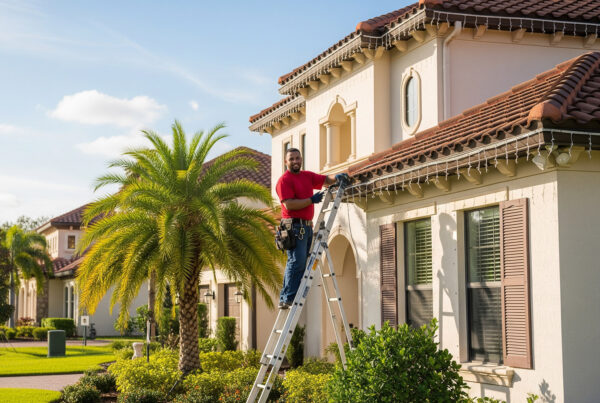

Before buying another box of holiday lights, decide where the display will go, how it will receive power, and how you’ll take it down. Those three decisions can prevent a last-minute scramble for extra cords, different mounting clips, or help reaching a roofline.
Residential holiday light installation involves planning a display, choosing suitable outdoor products, checking power and access, securing decorations, and arranging maintenance and removal. For Orlando homeowners, that plan should also account for rain, irrigation, neighborhood requirements, and the condition of exterior surfaces.
This guide walks through the decisions to make before decorating, whether you’re planning a modest front-entry display or comparing installation estimates.
In this guide
- Plan the layout before buying lights
- Choose suitable lighting products
- Check power, cords, and outdoor conditions
- Prepare your home for installation
- Compare costs and service options
- Plan maintenance, removal, and storage
- Review common homeowner questions
Start With a Simple Holiday Lighting Plan
Choose one main feature to highlight first. That might be the front entry, a visible section of the house, or a small group of shrubs.
Then decide whether additional lighting will improve the display or simply add more equipment and work.
Take a daylight photograph of the front of your home. Mark the features you want to decorate, along with doors, walkways, outdoor outlets, and areas where sprinklers reach.
For each feature, write down:
- The look you want
- The approximate area or length involved
- Whether it can be reached safely
- Where power would come from
- Any mounting or access concerns
For example, a homeowner might choose a warm-white entry display and two matching shrubs instead of outlining every roof edge. That creates a clear starting point for shopping or requesting an estimate.
Make measurements from safe, accessible locations. Leave elevated measurements and roof access to someone equipped for the work.
Choose Lights for the Location and the Look
Appearance matters, but the product’s intended use comes first.
Check whether each light set, extension cord, timer, and accessory is suitable for its planned location. An indoor product does not become appropriate for outdoor use because it sits beneath a porch roof.
The Consumer Product Safety Commission recommends checking light sets for cracked sockets, damaged wires, and loose connections, and choosing lights tested by an independent testing laboratory. Review its holiday decoration safety guidance before using stored or newly purchased decorations.
LED or incandescent lights?
LED holiday lights generally use less electricity than comparable incandescent sets. The Department of Energy also describes their durability and energy advantages in its holiday lighting explainer.
When comparing products, look beyond the bulb count. Check the rated power, lighted length, spacing, color, and connection instructions.
If matching white lights matters to you, compare samples before purchasing the entire display. Product names alone may not tell you whether two sets look alike.
Match the lighting style to the feature
| Area to decorate | Options to consider | Planning question |
|---|---|---|
| Front entry | Wreaths, garland, or a short light run | Will the door open freely and remain easy to use? |
| Roofline | A consistent outline | How will installation, inspection, and removal be handled? |
| Shrubs | Net lights or carefully arranged strings | Does the product fit the plant and intended exposure? |
| Tree trunks | Decorative light wrapping | Can the work be completed without unsafe climbing? |
| Walkway edges | Suitable stake-mounted decorations | Will walking routes and lawn maintenance remain clear? |
A coordinated display does not need every type of decoration. Choose the features you want people to notice and build around them.
Check Power Before Finalizing the Display
A convenient outlet location does not establish how much equipment can safely be connected.
Review the ratings and instructions for the lights, cords, timers, and other equipment together. Follow the manufacturer’s connection limits rather than relying on a universal number of strands.
The Electrical Safety Foundation International advises against overloaded outlets and recommends GFCI protection for outdoor outlets. A GFCI helps reduce electric-shock risk. Its holiday safety checklist also covers moisture protection and safe cord placement.
If you’re unsure about an outlet’s condition, protection, or capacity, have a qualified electrician assess it before installation. Adding or repairing an outlet is a separate task from hanging decorations.
Plan cord routes as part of the design
Sketch how each section will connect before you hang anything.
Keep routes away from doorways and walking paths, and avoid running cords beneath rugs or furniture. Choose equipment intended for the location and protect outdoor electrical devices from moisture.
If the layout depends on awkward cord routing, simplify the display or ask for a different power plan.
Set operating hours
Decide when the lights should switch off, not just when they should turn on.
An appropriately rated timer can help manage the schedule, but it does not replace checking the display. ESFI recommends turning off and unplugging decorations before leaving home or going to sleep.
Plan for Orlando’s Outdoor Conditions
For an Orlando home, include rain exposure and irrigation in the initial walkthrough.
Look at where water collects and where sprinklers reach. Ask how the proposed products and connections will be protected under their manufacturer’s instructions.
Also discuss what happens when weather affects the schedule. A useful installation plan includes time for postponement rather than making the entire project depend on one afternoon.
If your neighborhood has an HOA, check its current rules before purchasing decorations. Ask about installation and removal dates, operating hours, flashing effects, and any approval requirements.
Do not assume the neighboring property’s display establishes what your association permits.
Prepare Exterior Surfaces Before Installation
Decorations can make existing maintenance problems harder to reach. Check the condition of the areas that will be used for mounting before the display goes up.
From the ground, look for loose trim, damaged gutters, or other visible concerns. Ask the installer which attachment method is suitable for each surface and light product.
Avoid treating every clip or fastener as interchangeable. The mounting plan should fit the surface, support the decoration, and follow the product instructions.
If gutters need attention, arrange it before installing decorations around them. TJ Handyman Services provides information about gutter cleaning in Orlando to help you plan that work.
For a broader list of exterior concerns, consider a property maintenance assessment before the decorating date.
DIY or Professional Residential Holiday Light Installation?
The decision depends on the display’s height, access, electrical needs, and the equipment involved.
A small display at safely accessible locations may be manageable for a homeowner who can follow the product instructions. High rooflines, difficult terrain, large decorations, and uncertain power arrangements deserve a professional assessment.
Ask yourself:
- Can I reach each location without climbing onto the roof or overreaching?
- Do I understand the equipment’s ratings and instructions?
- Can I keep the installation area clear?
- Will I be able to inspect the display afterward?
- Can I remove everything safely when the season ends?
Installation is only one part of the work. A display that is difficult to reach in November will still be difficult to reach during removal.
If you’re considering outside help, prepare photographs and a short list of the features you want decorated. TJ Handyman Services can discuss your project and the work involved before you settle on a layout.
What Affects Holiday Light Installation Cost?
A meaningful estimate needs more detail than the home’s square footage.
Two homes of similar size may have very different access requirements, lighting layouts, and materials. Compare estimates against the same written plan.
Common cost factors include:
- Display size: The lengths and features being decorated
- Access: Height, slopes, obstacles, and working space
- Materials: Lights, clips, cords, timers, and decorative pieces
- Ownership: Whether you supply, purchase, or rent the equipment
- Preparation: Repairs or maintenance needed beforehand
- Seasonal support: What happens if a section stops working
- Removal and storage: Whether these are included or separate
For electricity use, compare the products’ rated wattage and your planned operating hours. Purchase price alone does not show the running cost.
Ask who owns the lights
Some arrangements use homeowner-owned decorations. Others supply equipment under a seasonal service agreement.
Before approving an estimate, ask:
- Who owns the lights after the season?
- Can existing decorations be used?
- Who replaces a failed light set?
- What maintenance visits are included?
- Is takedown included?
- Where will the equipment be stored?
- What happens if you do not rebook next year?
Get those answers in writing. Installation, maintenance, removal, and storage should not be assumed to mean the same thing in every quote.
When Should You Start Planning?
Work backward from the date you want the display operating.
Leave time to check neighborhood rules, choose products, assess access, compare estimates, and complete any exterior maintenance.
Early fall is a practical planning window if your goal is a display for Thanksgiving or December. That is a planning suggestion, not a promise about any installer’s availability.
When requesting an estimate, provide your preferred completion date and ask about weather delays. Schedule removal at the same time so it does not become an overlooked task after the holidays.
Make Maintenance and Removal Part of the Plan
Before installation is complete, ask how you should report a problem and which checks can be done safely from the ground.
Do not continue operating equipment that appears damaged or keep resetting a protective device without addressing the cause. Stop using the affected setup and have the problem assessed.
For removal and storage:
- Follow the products’ disconnection and handling instructions.
- Arrange appropriate help for elevated decorations.
- Label sets by the area where they were used.
- Keep compatible clips and accessories together.
- Record damaged items that need replacement.
- Follow the manufacturer’s storage instructions.
A photograph of the finished layout and a simple equipment list can make next season’s planning easier.
Before-Installation Checklist
Use this checklist before buying the final materials or confirming an installation date:
- Choose the main features to decorate.
- Review any HOA or property rules.
- Identify safe access and mounting needs.
- Check products for the intended outdoor use.
- Inspect existing lights and cords.
- Confirm the power plan and equipment limits.
- Address exterior maintenance first.
- Confirm materials ownership and included services.
- Agree on operating hours and problem reporting.
- Schedule removal and decide on storage.
Frequently Asked Questions
What does residential holiday light installation include?
It can involve layout planning, supplying materials, hanging decorations, testing, maintenance, and removal. The exact scope depends on the agreement, so ask which items are included and which cost extra.
How many holiday light strands can I connect?
Follow the connection limit for the specific product and the ratings of the rest of the setup. Different light sets use different amounts of power, so one strand-count rule should not be applied to every display.
Are LED holiday lights better for outdoor decorating?
LEDs offer energy-use advantages, but the product still needs to be suitable for outdoor use. Check its rating, instructions, color, spacing, and compatibility with your planned setup.
Can I leave outdoor holiday lights on overnight?
Plan to switch them off before bed. CPSC and ESFI guidance recommends turning decorations off when sleeping or away; ESFI also recommends unplugging them.
Can an installer use lights I already own?
Ask before requesting a final estimate. Acceptance may depend on their condition, suitability, compatibility, and the installer’s service arrangement.
Should holiday lights stay up all year?
Do not assume temporary holiday lighting is intended for permanent exposure. Follow its instructions, and treat permanent architectural lighting as a separate project with different equipment and installation requirements.
What should I do if the lights stop working after rain?
Stop using the affected display and have the cause assessed. Avoid handling wet electrical connections or repeatedly resetting a tripped protective device to keep the lights operating.
Plan the Display Before Hanging the First Strand
A useful holiday lighting plan covers the entire season: the layout, equipment, power, installation, maintenance, and removal.
Start with a manageable design and make the practical decisions before buying more decorations. That gives you a clearer shopping list or a better brief for an installer.
For help discussing residential holiday light installation in Orlando and surrounding Central Florida communities, call TJ Handyman Services at 321-424-8590 or contact the team online. Share a photo of your home, the features you want decorated, and your preferred timing.